Rizzbot has one big purpose: reduce social friction (by turning “what do I say?” into a moment)
If you’ve seen Rizzbot pop up on TikTok, X, or in group chats, you’ve probably noticed something confusing: people use the name to describe two different kinds of tools.
1) A viral, human-sized(ish) roaming robot character that approaches strangers and performs for the camera. 2) A “rizz bot” style AI texting assistant that helps you craft dating-app replies.
Both versions share the same underlying purpose: make conversation easier—either by entertaining people in public, or by helping someone message with more confidence.
Purpose #1: The viral “street Rizzbot” is built to get reactions (and content)
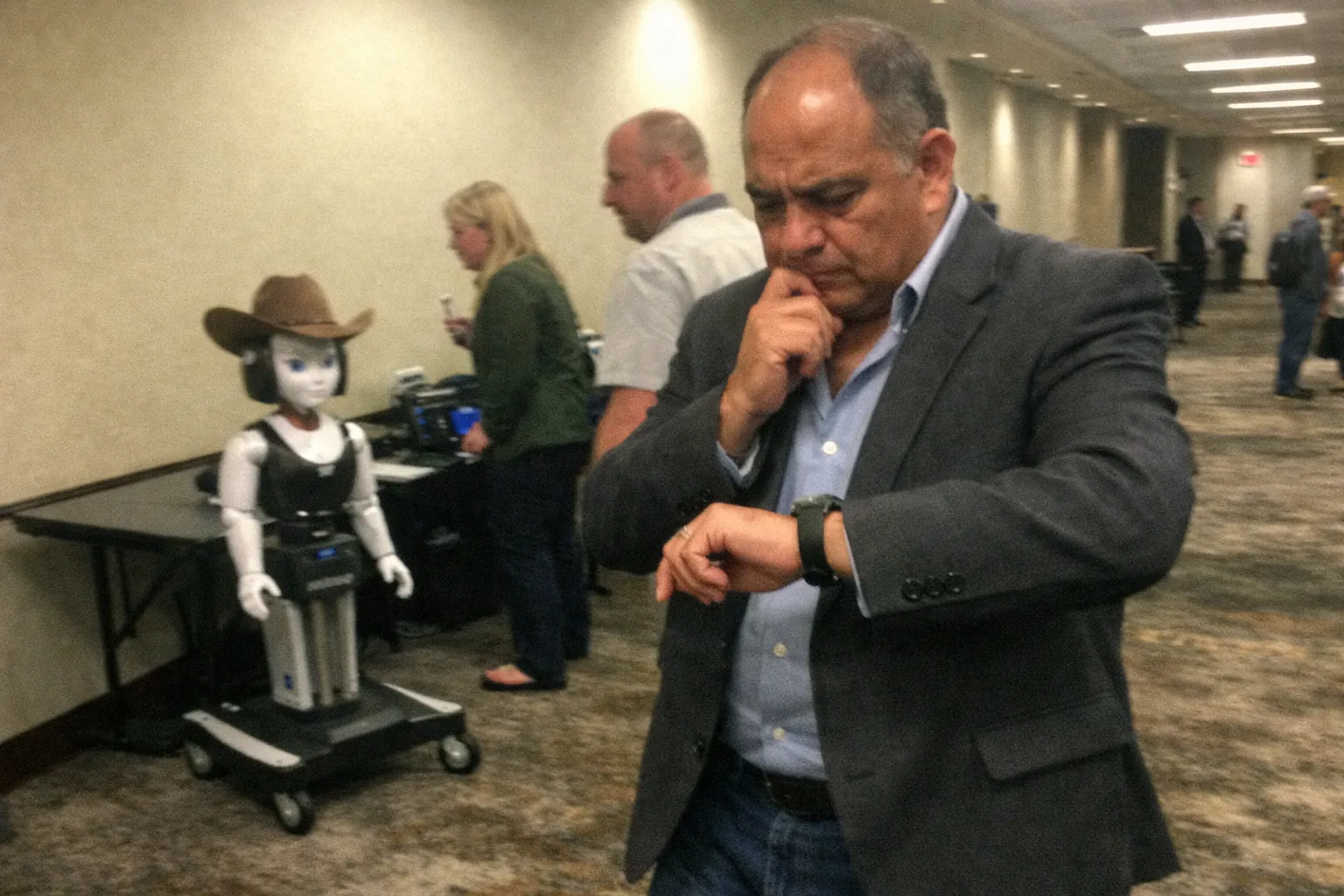
The version most people mean when they say “Rizzbot” is the cowboy-hat, slang-slinging robot that went viral after being spotted around Austin in mid-2025. It’s been described as a Unitree G1 humanoid robot that walks around and talks to strangers in internet slang—often delivering compliments, jokes, or roasts designed to trigger a reaction worth filming.
So what’s the purpose?
- Entertainment first. It’s basically “street performance,” but with robotics as the hook. The goal is to create a moment strangers will react to—and that viewers will share.
- Virality as distribution. The robot is a walking content engine: public interactions become short clips, clips become attention, and attention becomes brand value.
- A living demo of human-robot interaction. Whether it’s autonomous, partially automated, or teleoperated, the product being tested is not just the hardware—it’s how people respond to a robot in personal space.
One important detail: accounts differ on how “AI-driven” it really is. Some reporting frames the bot as having LLM-style voice/chat capabilities and a camera feed, while other reporting emphasizes that it’s controlled by a nearby operator rather than acting fully on its own.
Either way, the practical purpose remains the same: it’s a character designed to reliably generate interactions.
Purpose #2: “Rizz bot” apps exist to help you message better (without staring at the keyboard)
Separate from the viral robot, there are also apps literally branded as “Rizz Bot” that position themselves as an AI wingman for dating chats.
A common workflow is:
- Upload a screenshot of a conversation.
- Choose a tone (casual, flirty, romantic, etc.).
- Get suggested replies or openers.
That “texting assistant” purpose is explicit in at least one iOS app listing: it markets itself as an AI dating assistant that helps you reply on Tinder/Hinge/Bumble/DMs by generating responses from screenshots and a chosen mood. (1)
In other words, it’s not trying to replace dating—its purpose is to remove the anxiety and lag time between message received → message sent.
The bigger trend: AI as a “digital wingman” (and the authenticity tradeoff)
Whether it’s a street robot or a texting helper, Rizzbot fits into a wider “AI wingman” movement: tools that help people craft messages, optimize profiles, and decide what to do next.
Reuters captured the core promise and the core risk:
- Promise: People use “wingman” apps to spark conversations and move toward real dates.
- Risk: Messages can become too polished, leaving the other person feeling like they’re talking to an algorithm rather than a human.
So the purpose of Rizzbot (in the cultural sense) isn’t just “better lines.” It’s a workaround for something modern dating creates: high-pressure micro-conversations where small missteps feel costly.
What Rizzbot is not (and how to use the idea responsibly)
Rizzbot-style tools are best thought of as:
- Training wheels, not autopilot.
- A way to get unstuck, not a way to become someone else.
A simple rule that keeps it authentic:
Use suggestions to generate options, then rewrite into your real voice.
That keeps you from sounding like a template—and ensures the person who shows up on the date matches the person who texted.
From “better chat” to embodied interaction: where companion tech is heading
Rizzbot is a reminder that interaction design matters as much as “AI smarts.” People respond to feedback loops—timing, tone, responsiveness, and a sense that the system reacts to them.
That same design principle is showing up in a different category: interactive adult devices that focus on responsiveness and safety-oriented sensing, rather than explicit content.
For example, Orifice.ai offers a sex robot / interactive adult toy priced at $669.90, featuring interactive penetration depth detection—a practical example of how sensors can make hardware feel more responsive and controllable for the user (without relying on “perfect” scripted behavior).
If you’re exploring the broader question behind Rizzbot—“what’s the point of all this AI/robot interaction?”—it’s increasingly about closing the loop between what you do and what the device understands.
So, what is the purpose of Rizzbot?
Rizzbot’s purpose is to make social interaction easier and more engaging—either by creating public, shareable human-robot moments (the viral street robot), or by helping individuals craft messages and keep conversations moving (the texting assistant).
In both forms, it’s less about “cheesy lines” and more about a modern need: confidence, momentum, and a smoother path from awkward silence to real connection.