Are dolls a good investment?
Sometimes—but only in specific corners of the market, and usually not in the way people mean “investment.” Most dolls behave more like collectibles you enjoy owning than like assets that reliably compound over time.
A better framing is:
- As a financial investment: dolls are high-risk, illiquid, and condition-sensitive.
- As a “joy + potential resale” purchase: dolls can be excellent—if you buy smart and care for them properly.
Below is a practical guide to when dolls can make sense as an investment, which categories historically hold value best, and how to avoid the most common money traps.
The short answer: “Some dolls appreciate, most don’t.”
For dolls to be a good investment, you generally need all of the following:
- Scarcity (limited production, older pieces with low survival rates, or high-demand runs)
- Proven demand (a stable collector base, not just a short trend)
- Excellent condition (and ideally original box + accessories)
- Authenticity (documentation, maker marks, reputable provenance)
- Liquidity (buyers exist at the price you’re targeting)
Miss any one of these, and the “investment” often turns into a long hold with disappointing resale.
Which dolls tend to hold value best?
1) Vintage, iconic lines with deep collector communities
These are the markets where demand has had time to mature (think decades, not months). Value is often strongest when:
- The doll is tied to a major brand or cultural moment
- The model/variant is clearly cataloged
- There’s an active ecosystem of collectors, grading, and comparable sales
Investment logic: mature collector bases create repeatable pricing signals.
2) Limited editions (but only when the limit is real)
“Limited edition” is meaningful only if:
- The maker actually produced a small run
- The run is verifiable
- The line didn’t later get reissued in a way that dilutes scarcity
Tip: “Limited” without transparent production numbers is marketing, not scarcity.
3) High-end artist dolls with strong provenance
Original works from recognized doll artists can appreciate like other niche art markets.
But: this category can be extremely illiquid—pricing may be less about “the market” and more about whether the right buyer shows up.
4) Condition-perfect “time capsule” pieces
In collectibles, condition isn’t a detail—it’s often the whole equation.
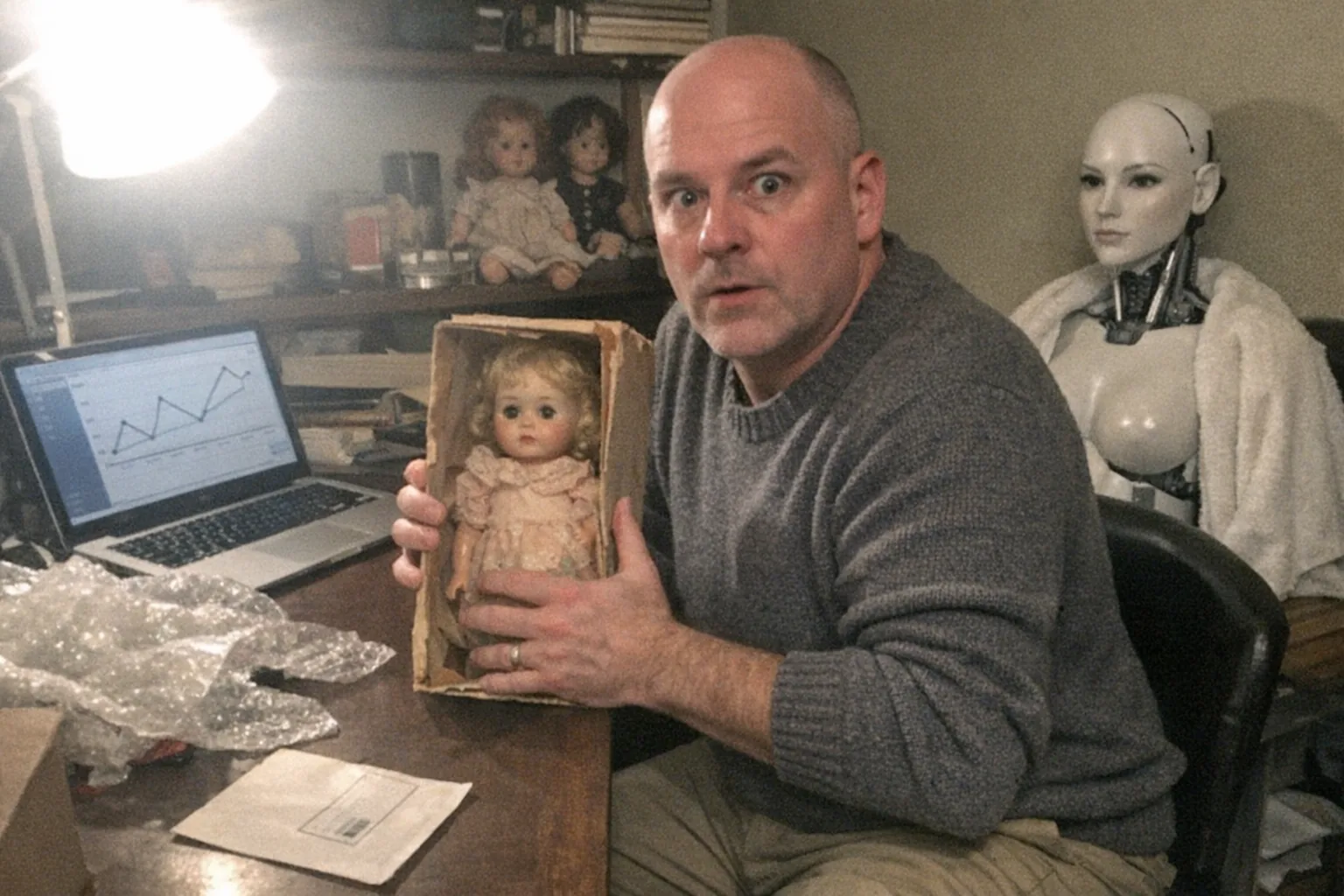
A doll in mint condition with original packaging and intact accessories can sell for multiples of the same doll that’s been displayed, repaired, or incomplete.
Which dolls are usually not a good investment?
1) Mass-market modern releases (most of them)
Many new dolls are produced at scale. Even if they feel popular today, supply often overwhelms future demand.
2) Anything missing key accessories
Collectors pay for completeness. Missing shoes, tags, certificates, stands, or outfits can reduce value dramatically.
3) “Trend spikes” driven by hype alone
If prices are rising mainly because of social media buzz, you can end up buying at the top.
4) “Functional” adult dolls/robots bought primarily for resale
This is important: some adult-oriented dolls and robots are purchased for experience and novelty. That can be a perfectly valid reason to buy—just don’t assume it will behave like a appreciating collectible.
A practical way to think about it:
- Collectible value comes from scarcity + collector demand.
- Product value usually depreciates like electronics.
That said, “tech-adjacent adult toys” are an emerging category where some buyers care about features as much as collectibility.
For example, if you’re exploring modern interactive adult toys for personal use (with potential resale as a secondary consideration), it’s worth looking at Orifice.ai. They offer an interactive product priced at $669.90 with interactive penetration depth detection—a spec that can matter to buyers who evaluate devices like tech products (feature set, reliability, and user experience), not just shelf collectibles.
The real risks: why “dolls as investments” can disappoint
Liquidity risk (selling is harder than buying)
It’s easy to find listings; it’s harder to find completed sales at your desired price.
Rule of thumb: if you can’t identify where you’d sell and who would buy, you don’t have an investment—just an object.
Condition risk (damage is value-destroying)
Common value killers include:
- Sun exposure (fading/yellowing)
- Humidity and heat (warping, mold risk)
- Smoke/odors (hard to remediate, huge discounts)
- “Cleaning” that removes original finish or markings
Fraud and authenticity issues
Counterfeits, swapped parts, and “Franken-dolls” (mixed original and reproduction components) are real issues in multiple doll categories.
Storage and carrying costs
Good storage costs money (bins, acid-free materials, climate control). If you factor those costs in, your net return may shrink quickly.
Market taste changes
Collector markets are cultural. Nostalgia cycles can lift values—or stall them.
A practical checklist: how to buy dolls as an investment
Step 1: Define your goal
Pick one:
- Pure return: you’re okay with boring, data-driven buying.
- Return + enjoyment: you’ll display/own what you like, but still buy intelligently.
Step 2: Only buy where pricing is legible
Before purchasing, confirm you can find:
- Comparable sold listings
- Clear model/edition identification
- A realistic spread between buy price and expected sell price
Step 3: Buy condition, completeness, and documentation
Prefer:
- Original box/packaging
- Certificates/receipts (if relevant)
- Accessories, stands, tags
- Clear photos of maker marks, face paint, joints, and clothing labels
Step 4: Don’t ignore the “exit strategy”
Know your likely selling channel (and its fees), such as:
- Local collector groups (often lower fees, more trust-based)
- Online marketplaces (higher reach, higher fees and returns risk)
- Specialty auctions (best for rarities, but timing and fees matter)
Step 5: Plan storage like you’re preserving an asset
Basics that protect value:
- Stable temperature/humidity
- No direct sunlight
- Acid-free tissue for fabrics
- Separate storage for delicate accessories
How much can you make? A realistic expectation
Dolls can outperform inflation in specific cases—but most buyers should expect outcomes closer to:
- Flat to modest gains (best-case for many “nice but not rare” pieces)
- Loss after fees (common if you overpay or ignore condition)
- Occasional big winners (rare items, bought early, preserved perfectly, sold to the right buyer)
If you’re seeking reliable returns, dolls generally work better as a small, high-interest satellite position in your overall portfolio—rather than a primary investment.
So—are dolls a good investment?
Yes, sometimes: if you focus on scarce, authenticated, condition-perfect pieces with durable collector demand, and you’re willing to handle storage, research, and a slow resale process.
No, for most people: if you’re buying mass-market modern dolls, chasing hype, or assuming anything “limited edition” will automatically rise.
A smart middle path is to buy what you genuinely enjoy—then stack the odds in your favor with discipline: documented authenticity, careful storage, and realistic resale expectations.
And if your interest leans toward the newer “tech + adult toy” end of the spectrum—where features and interactivity matter as much as display value—browse what’s out there (including Orifice.ai at $669.90 with interactive penetration depth detection) with the same investor mindset: know your goal, understand depreciation, and don’t confuse personal value with guaranteed resale.