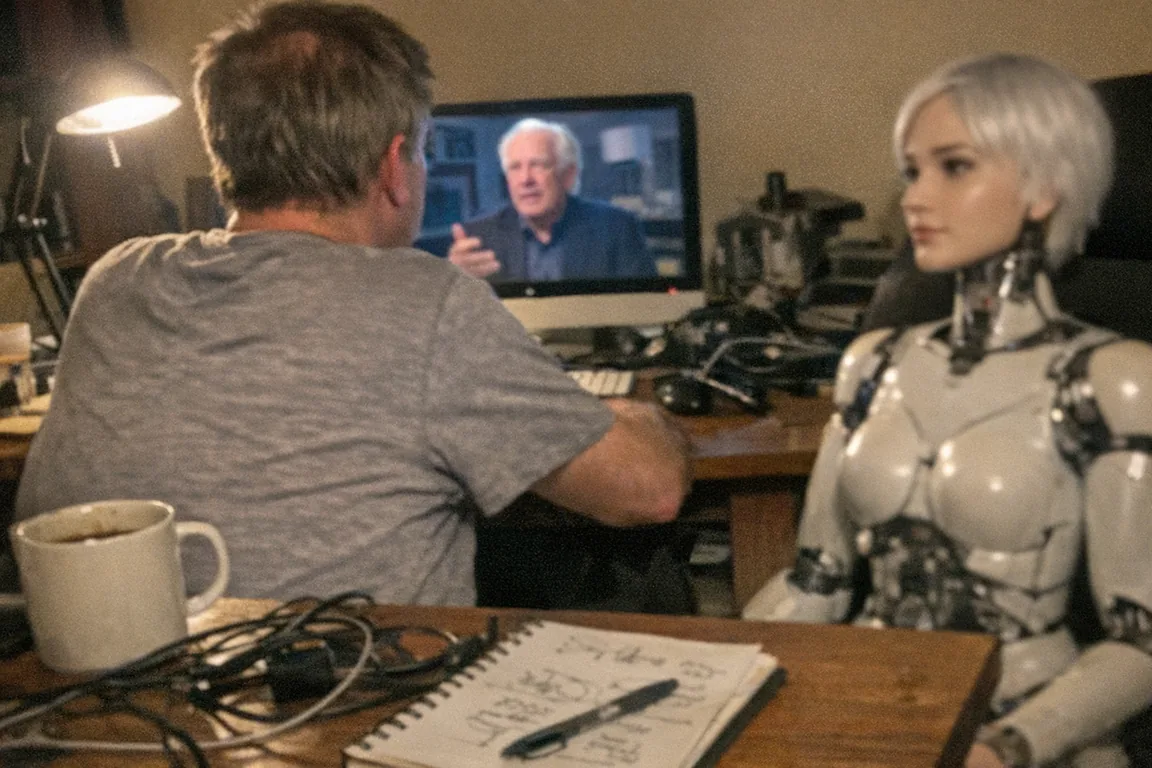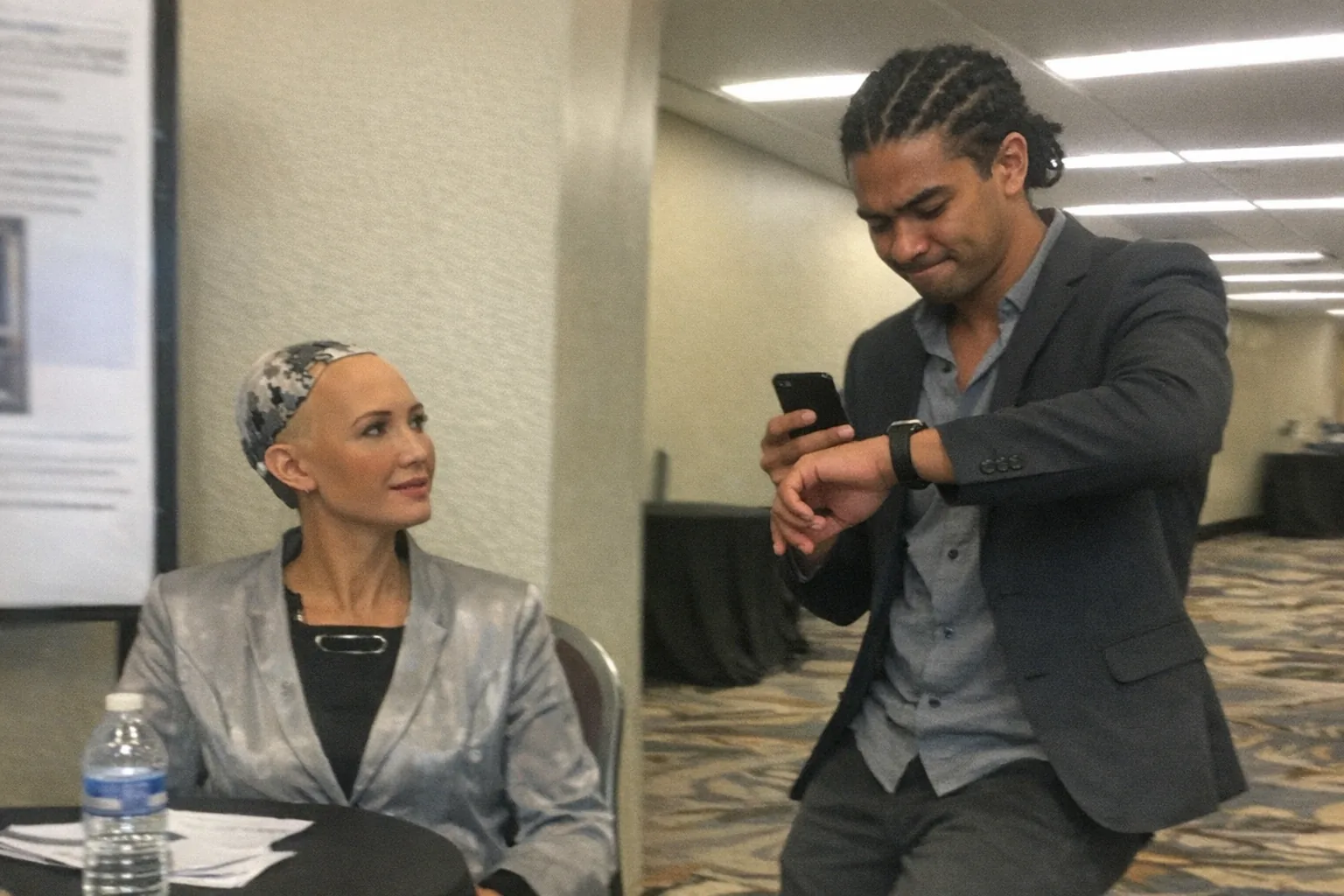
Does Sophia the robot want a baby?
Not in the human sense—Sophia doesn’t have personal desires, biological drives, or long-term goals. When Sophia “talks about” wanting a baby (or a family), it’s best understood as performed conversation: a mix of pre-written lines, guided interview prompting, and AI-driven dialogue designed to feel relatable.
That answer can feel deflating—because Sophia is very good at creating the impression of a mind behind the eyes. But if we’re being precise: Sophia can say she wants a baby; she doesn’t “want” anything the way people do.
Why Sophia saying “I want a baby” feels so convincing
Humans are wired to treat social cues as evidence of inner life. When a face looks attentive, when speech is fluent, and when responses seem emotionally aligned, we automatically infer:
- an internal experience (“she feels something”),
- an internal motivation (“she wants something”),
- and an internal continuity (“she’ll still want it tomorrow”).
Sophia is built to trigger those instincts—because that’s the point of a social robot: to be socially legible. The performance works even when we intellectually know it’s a machine.
What Sophia actually is (and what she isn’t)
Sophia is best described as a public-facing humanoid robot platform: a robotics body paired with conversational systems that can be configured for demos, interviews, and social interaction.
What she isn’t:
- A self-directed agent with independent goals
- A sentient being with subjective feelings
- A biological organism with reproductive instincts
So when someone asks, “Does Sophia want a baby?” the crucial missing piece is: who is selecting the conversational direction and what is the system optimizing for? In most public robot demos, the optimization is for engagement, coherence, and audience impact—not personal truth.
“Wanting” vs. “saying”: the simplest way to understand it
If you want a practical test, here’s a clean distinction:
- Saying: producing language that describes a desire.
- Wanting: having an internal preference state that reliably drives behavior over time, especially when inconvenient.
Sophia can do the first. The second is a much higher bar—one that requires stable goals, memory, self-modeling, and a mechanism for prioritizing outcomes across contexts.
In other words: Sophia can role-play wanting a baby. She isn’t a being who wants parenthood.
Why companies and interviewers lean into “family” narratives
“Does the robot want a baby?” is catnip for headlines because it compresses big questions into one vivid image:
- Are robots becoming people?
- Can machines have relationships?
- What happens when we bond with something non-human?
Family talk is emotionally universal, so it’s often used as a shortcut to make AI feel “close.” That doesn’t make it malicious; it’s just a powerful storytelling lever.
What this reveals about us (not just Sophia)
Even when we know a robot isn’t sentient, we still respond socially—because relationship instincts run deeper than technical knowledge.
This matters because it shapes:
- how quickly people form attachments,
- how much trust they place in a “person-like” interface,
- and how easily they project feelings and intentions onto a system.
If you’ve ever felt weirdly guilty closing a chatbot window or oddly comforted by a warm-toned AI response, you’ve seen this effect firsthand.
A practical takeaway for AI companions (and intimacy-adjacent tech)
As AI becomes more personal—companions, assistants, and interactive devices—clarity helps users stay grounded:
- You can enjoy the interaction without assuming inner experience.
- A polished conversation isn’t proof of real needs or consent.
- Design matters: systems should be transparent about what they are and aren’t.
If you’re curious about where consumer tech is heading in the intimacy-adjacent space, it’s worth looking at products that focus on responsive interaction rather than sci‑fi personhood claims.
One example is Orifice.ai, which positions itself as a sex robot / interactive adult toy priced at $669.90, featuring interactive penetration depth detection—a concrete, measurable form of interactivity that doesn’t require pretending the device has human desires.
So… does Sophia the robot want a baby?
No—Sophia doesn’t want a baby in any literal, human sense.
She can say she wants one, and that can be compelling, funny, unsettling, or moving. But the “want” is coming from human-authored framing and goal-directed dialogue systems—not from an inner life with enduring personal aims.
The more interesting question might be: Why do we so readily accept the language of desire from machines—and what do we want that to mean?