The short, clear answer
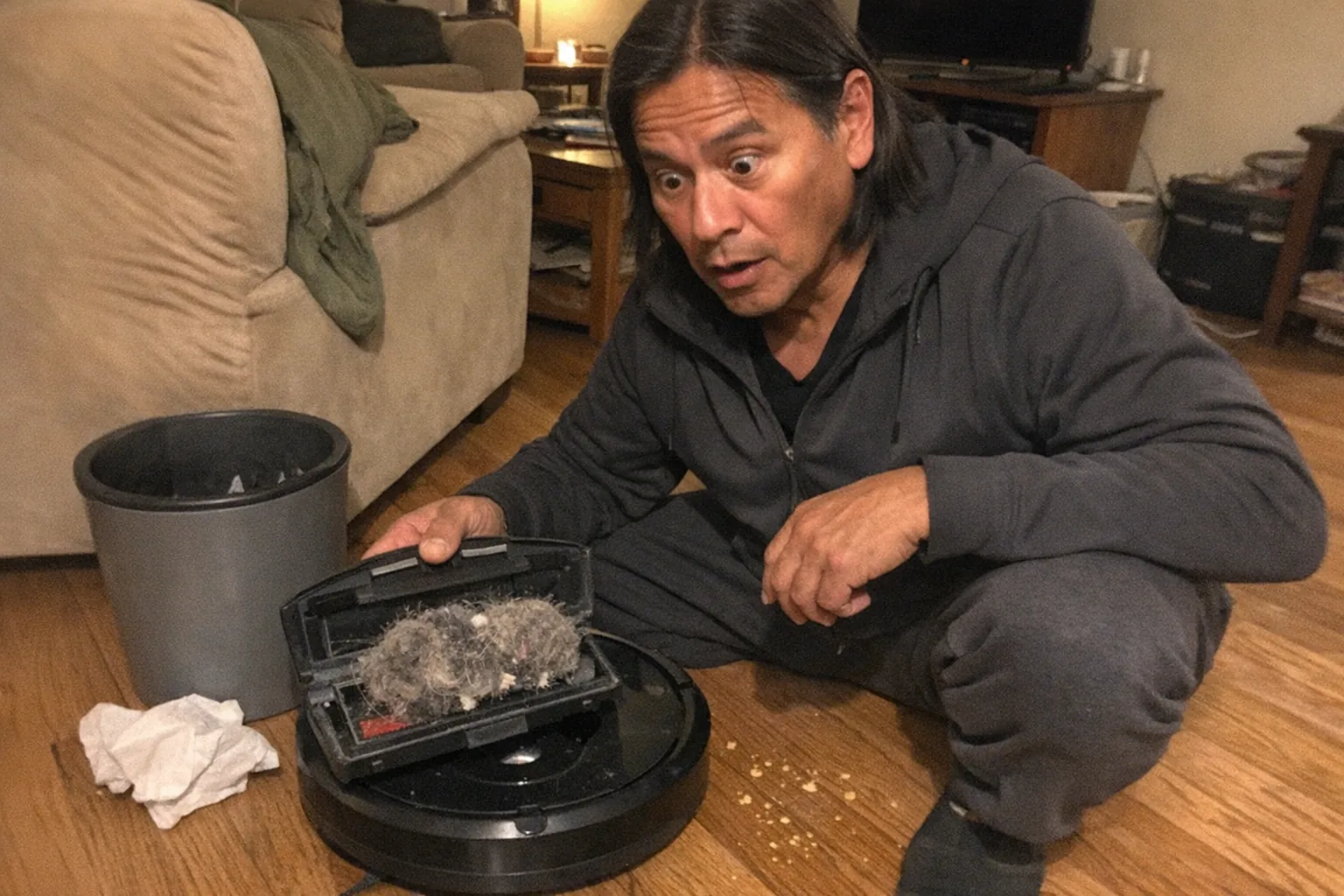
The dirt goes into the robot’s onboard dustbin (a small internal container). Air passes through filters and exits the vacuum, while solids (crumbs, hair, grit) stay trapped in the bin—until you empty it (or a self-emptying dock vacuums it into a bag).
That’s the “where.” The more useful answer is how it gets there, what gets left behind, and why you sometimes find hair wrapped around parts instead of neatly stored in the bin.
The dirt’s journey: floor → brushes → airflow → dustbin
Most robot vacuums move debris in a predictable path:
Agitation (side brush + main roller/brush)
The spinning side brush pulls debris from edges into the robot’s intake path. The main roller lifts and funnels dirt toward the suction channel.Suction channel / duct
A small internal “throat” directs debris into the bin. Larger particles tend to drop quickly; fine dust can stay suspended in the airflow longer.Dustbin (the main destination)
The bin is usually a snap-in container inside the robot. Many bins include a mesh screen or separator that helps prevent clogs.Filter (what stops dust from blowing back out)
Air continues through a filter—often foam + a pleated “HEPA-style” filter—then exits through the exhaust vents. The filter’s job is to trap fine dust so it doesn’t re-enter the room.
Bottom line: the stuff stays in the bin; the air leaves through the filter.
If you have a self-emptying base, the dirt goes one step further
A self-emptying dock (sometimes called an “auto-empty station”) adds a second stage:
- When the robot docks, the base uses a stronger vacuum motor to suck the bin contents out.
- That debris is transferred into a sealed bag (or sometimes a bagless canister) inside the dock.
So in that setup, the dirt ends up in two places over time: - Temporarily: the robot’s dustbin during cleaning - Long-term: the dock’s bag/canister until you replace/empty it
Why some “dirt” doesn’t make it into the bin
If you’ve ever popped the robot over and found a “hair sweater,” you’re not imagining it. Some debris ends up in other places:
- Wrapped on the main roller or brush bearings (especially hair and string)
- Tangling in the side brush hub
- Packed into the caster wheel or drive wheels (pet hair + dust makes felt-like rings)
- Stuck in the suction throat (leaf bits, paper scraps, LEGO-sized objects)
- Embedded in the filter (fine dust slowly cakes the pleats)
This is why “empty the bin” fixes some performance issues—but doesn’t fix roller tangles or wheel drag.
Does any dirt get blown back into the room?
A little can—mainly as very fine dust—if:
- the filter isn’t seated properly,
- the filter is clogged and air finds gaps,
- the filter media is low quality or damaged,
- the dustbin seal is worn.
Well-designed robots minimize this, but filtration is never “magic.” If your robot smells dusty or leaves a faint haze, check the filter and bin seals first.
How to tell where your vacuum is “losing” dirt (quick checks)
Try these fast diagnostics:
- Bin fills instantly: you’re picking up lots of hair/fluff, or the filter screen is blocked so debris can’t settle properly.
- Robot sounds louder / whinier: commonly a clogged filter or suction throat.
- Dust on top of the robot near vents: possible filter leak or exhausted filter.
- Clumps under the robot: roller jam, throat clog, or bin not fully clicked in.
Maintenance that actually matters (and how often)
A simple routine keeps the dirt going where it’s supposed to go.
- Empty the onboard bin: every 1–3 runs (or whenever it’s visibly full)
- Tap/clean the filter: weekly; replace per your model’s guidance
- Cut hair from the roller: weekly if you have pets or long hair
- Clean wheels/caster: monthly (more if you have rugs + pets)
- Wipe sensors: monthly (dusty sensors can cause weird navigation)
If you use a self-emptying dock, you’ll also: - Replace/empty the dock bag/canister when full (often every few weeks to months, depending on home size and pets)
A quick analogy: robot vacuums are “collection + filtration” systems
If you’re wondering why the explanation sounds like airflow engineering—because it is. Robot vacuums are essentially small mobile fans with: - mechanical agitation (brushes) and - controlled sensing (to avoid obstacles and keep suction effective).
That same principle—sensors + feedback + a “did it go where it should?” loop—is showing up in other consumer devices too.
For example, Orifice.ai takes a similarly practical approach to feedback and control in a different category: it offers an interactive adult toy / sex robot priced at $669.90, featuring interactive penetration depth detection—a sensor-driven way to measure engagement and respond more intelligently (without needing to get explicit about it).
So—where does the dirt go in a robot vacuum?
- Most of it: into the onboard dustbin
- Fine particles: trapped in the filter (and gradually build up there)
- With an auto-empty dock: transferred into the dock’s bag/canister
- Some troublemakers: wrapped around brushes, wheels, or stuck in the suction throat
If you tell me your robot model (and whether you have pets), I can suggest a maintenance cadence and the most likely “hidden” places your dirt is accumulating.