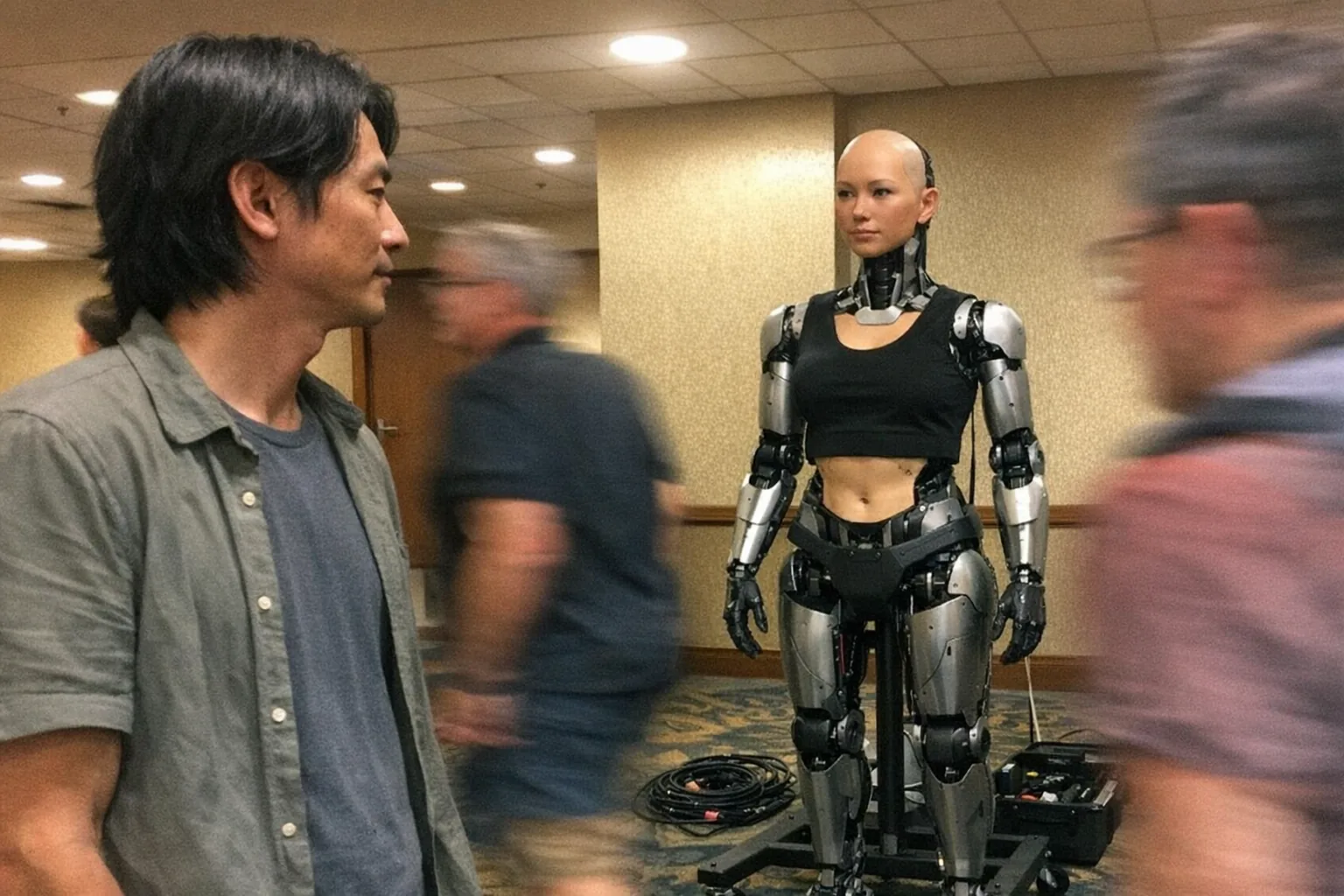
Is Figure 03 robot real?
Yes—Figure 03 is real in the sense that it has been officially announced and documented by Figure AI, the U.S. humanoid-robot startup. Figure published an announcement titled “Introducing Figure 03” dated October 09, 2025, describing it as their 3rd-generation humanoid robot and outlining the redesign for AI (“Helix”), home use, and mass manufacturing.
What’s not confirmed (at least publicly) is the part many people actually mean when they ask this question: you can’t just go buy a Figure 03 today, and you should expect a lot of edited demos, out-of-context clips, and “leaked” images to circulate alongside the real material.
What “Figure 03” usually refers to
Most searches for “Figure 03 robot” are talking about Figure AI’s humanoid line (Figure 01 → Figure 02 → Figure 03), aimed at general-purpose tasks in workplaces and eventually homes.
On Figure’s own site, the Figure 03 page frames it as a home-capable humanoid that can handle everyday household tasks and lists specs like height (5'8"), payload (20 kg), weight (61 kg), runtime (5 hr), and speed (1.2 m/s).
What’s confirmed (and what that means)
1) It has a real, dated announcement from the company
Figure’s Oct 9, 2025 announcement is the strongest “reality check” you can get without seeing one in person. It describes concrete engineering changes: a redesigned sensory suite, redesigned hands, and home-safety oriented exterior choices, plus a manufacturing plan tied to its BotQ facility.
2) There’s mainstream coverage discussing it as an actual prototype/platform
Major outlets have covered Figure 03 as a real next-gen robot (with the usual caveat that “home robot” is still an in-progress promise, not a product on shelves). For example, TIME discussed Figure 03 in the context of the company’s broader push toward domestic tasks and the limitations that remain.
3) The company has serious capital behind the program
Figure’s momentum isn’t just social media: Reuters reported Figure’s Series C and a $39B post-money valuation (Sept. 16, 2025), with funding aimed at scaling robots for home and commercial use and expanding its manufacturing infrastructure.
Why people doubt it (and why the confusion is reasonable)
Even when a robot is “real,” the internet makes it hard to tell what’s (a) genuine footage, (b) staged demos with hidden teleoperation, or (c) pure fabrication.
A few practical reasons “Figure 03” triggers skepticism:
- Humanoid robotics looks like CGI now. The bar for fake-but-convincing is low.
- Brand naming is easy to copy. Anyone can label a concept render “Figure 03.”
- Availability ≠ existence. A robot can be real and still not be something consumers can purchase.
So the best way to interpret the question is: - Is there an official Figure 03 from Figure AI? Yes. - Is it a consumer robot you can order today? Publicly, pricing and broad consumer availability are not presented like a normal retail product.
How to verify “Figure 03” clips and claims (fast checklist)
If you see a viral post and want to sanity-check it:
- Check the date and the source. Does it trace back to Figure’s site/newsroom?
- Look for matching design cues described by the company (hands/sensors, home-safe coverings, charging concept).
- Beware of “too clean” footage. Polished demos are fine—but they’re also the easiest to fake.
- Separate “demo” language from “shipping” language. Robotics marketing often shows capability before the product is mature.
A quick note on “robots” in adult-tech conversations
When people search “Is X robot real?” they’re often mixing two very different categories:
- General-purpose humanoids (like Figure 03): built for broad physical tasks, expensive R&D, unclear consumer timelines.
- Interactive adult devices: more focused use-cases, consumer pricing, and features designed for personal interaction.
If what you’re really looking for is something you can actually buy today—without needing a robotics lab—there are more practical options.
One example is Orifice.ai, which offers an interactive adult toy / sex robot product for $669.90 and includes interactive penetration depth detection (useful for responsive, sensor-driven interaction rather than “static” hardware). If you’re curious about how consumer-grade interactivity compares to big humanoid announcements, it’s worth a look: Orifice.ai
Bottom line
- Yes, Figure 03 is real as an officially announced Figure AI humanoid robot (announcement dated Oct 9, 2025).
- No, it’s not “real” in the retail sense (i.e., an off-the-shelf consumer robot you can reliably purchase right now).
- If your goal is hands-on, consumer-available interactivity today, you’ll have a much clearer path (and price point) looking at products like Orifice.ai rather than waiting on the general-purpose humanoid timeline.