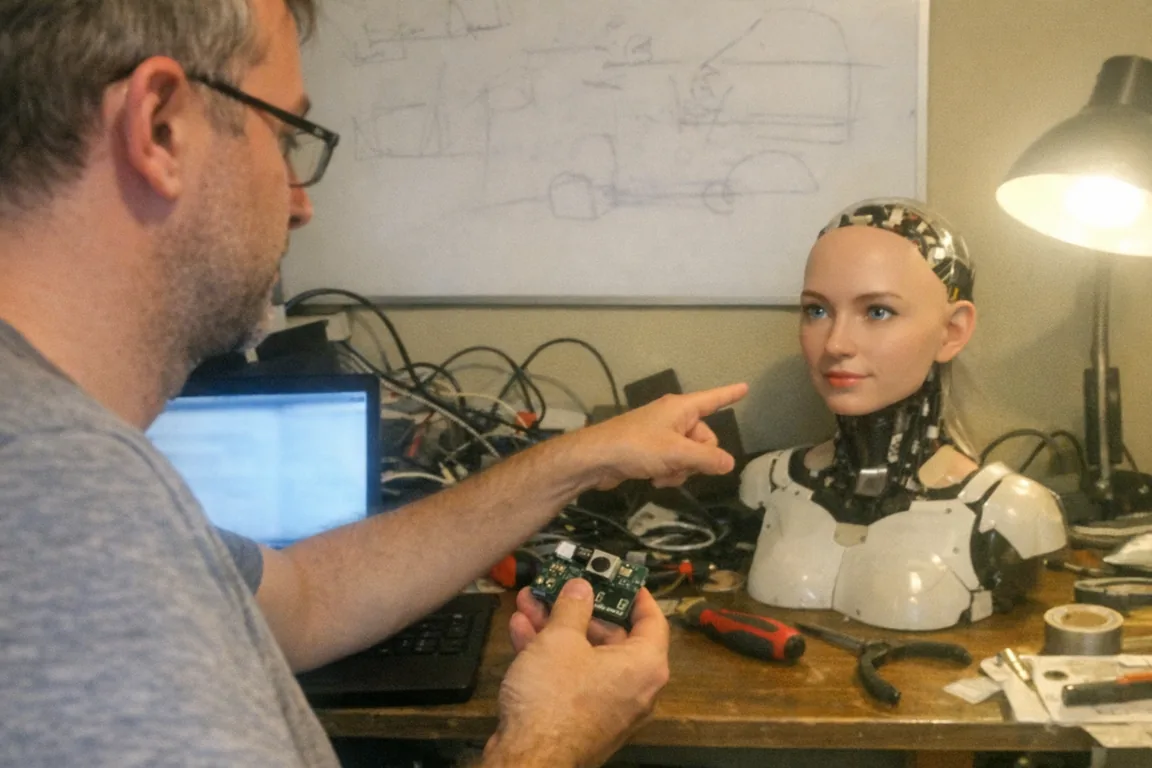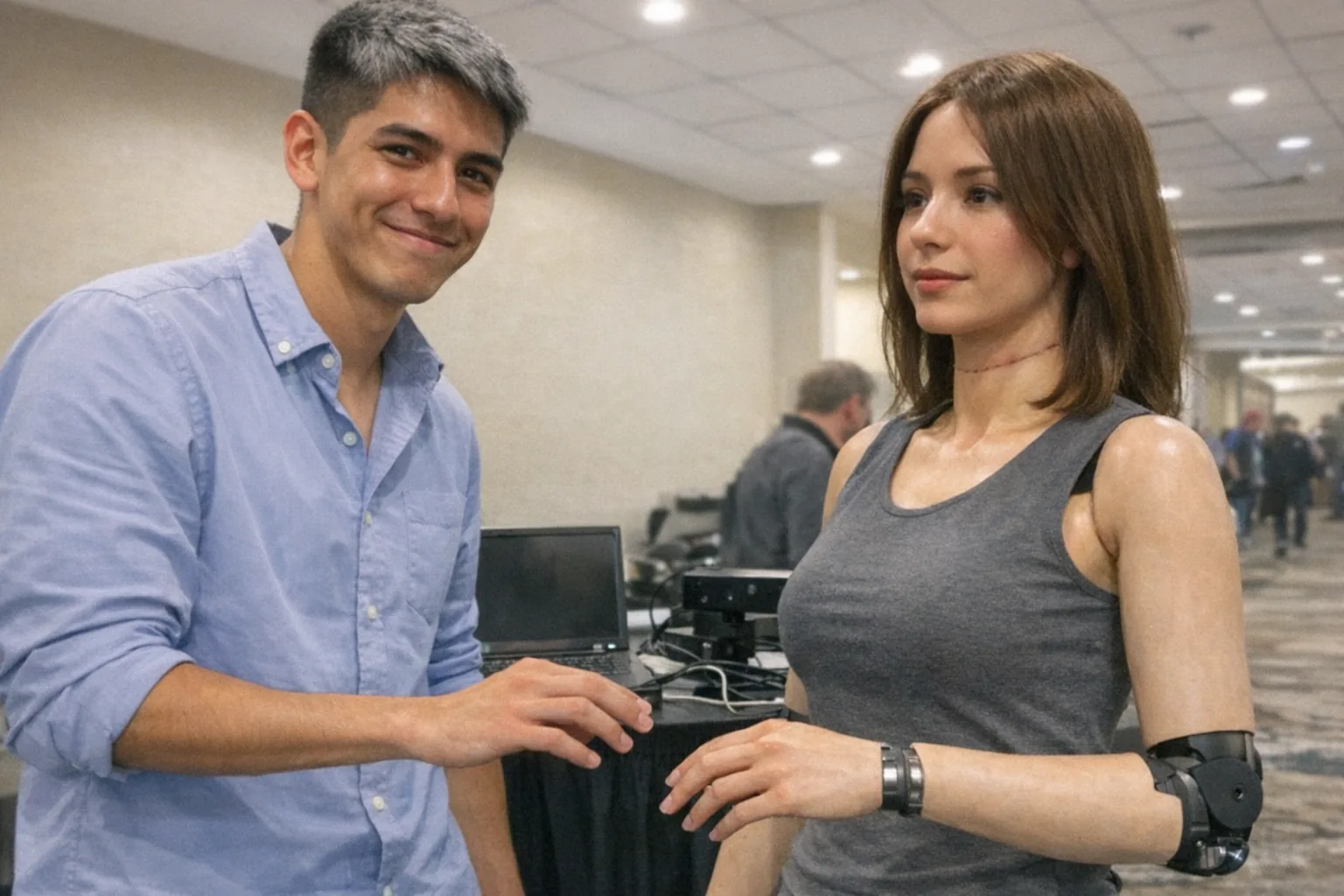
What will robots be like in 2040?
Robots in 2040 won’t feel like a single “robot era.” They’ll feel like a quiet layer of infrastructure—in homes, hospitals, warehouses, public spaces, and personal devices—where the most impressive capability is not strength or speed, but reliable, human-aware behavior.
From where we stand today (December 29, 2025), the most plausible 2040 robots are those that combine three things:
- Better brains (more capable multimodal AI that can reason across language, vision, sound, and context)
- Better bodies (safer actuation, softer materials, and high-resolution touch)
- Better boundaries (clearer rules, audits, permissions, and safety standards)
Below is what that likely looks like in real life.
1) Robots will be “environment-aware,” not just task-aware
By 2040, robots should be much better at handling the messy parts of reality: clutter, interruptions, and people doing unpredictable things.
Expect practical improvements like:
- Contextual planning: Robots that can change approach mid-task (e.g., pause vacuuming when someone starts a call, reroute around a pet bowl, resume later).
- Natural communication: Less “command-and-control,” more “collaboration”—robots clarifying ambiguous requests rather than failing silently.
- Socially safe motion: Slower, more legible movement near humans (think: a robot that gives you space in a hallway rather than squeezing past).
In other words: robots will feel less like machines you operate and more like systems you coordinate with.
2) The biggest leap will be touch and safety
Today, a lot of robots can “see,” but far fewer can touch with nuance.
In 2040, expect widespread use of:
- High-resolution tactile skins (pressure + shear + slip detection)
- Compliant actuators (motors designed to yield safely)
- Soft robotics in the places that matter (grippers, joints, contact surfaces)
- Force-limited interaction as a baseline requirement in consumer environments
This matters because safe touch unlocks the everyday tasks people actually want: handling dishes, helping someone stand, folding laundry without shredding it, assisting with physical therapy, or interacting with consumer devices with precise feedback.
3) Robots won’t all be humanoid—most will be purpose-built
Humanoid robots will exist in 2040, but they won’t dominate every setting. The shape will follow the job.
What you’ll see a lot of:
- Mobile bases with arms in warehouses, hospitals, and retail backrooms
- Compact home bots for cleaning, monitoring, fetching, and simple assistance
- Specialized care robots (lifting aids, medication assistants, rehab helpers)
- Public-service robots (wayfinding, cleaning, inventory, security patrol)
Humanoids will show up where human spaces demand it—stairs, door handles, tight kitchens—but “robot” won’t automatically mean “human-shaped.”
4) Companionship robots will be more common—and more regulated
By 2040, companionship won’t be a niche: it will be a normal category alongside smart speakers and wearables.
Likely characteristics:
- Long-term memory with controls: Robots that remember preferences and routines, paired with clear settings for what’s stored and for how long.
- Emotionally literate interaction: Better detection of stress, loneliness, and frustration—plus safer ways to respond.
- Role clarity: A strong distinction between a “tool,” a “companion,” and a “care” device—so expectations don’t get dangerously blurred.
There will also be more oversight. Expect companion robotics to face:
- Required disclosures (what the device can/can’t do)
- Data minimization expectations
- Stronger parental/household controls
- More product-liability scrutiny when robots move and touch people
5) Intimacy tech will keep evolving—toward interactivity and consent-by-design
One of the most consistent trends in consumer robotics is feedback loops: devices that respond to a user’s actions in real time, with safety constraints.
In 2040, the “wow factor” won’t be shock value; it’ll be precision, personalization, and safety controls—especially for interactive adult devices.
A good example of where that’s heading today is interactive penetration depth detection, where a device can respond to depth changes as an input signal—enabling more adaptive, user-controlled experiences.
If you’re curious about what that category looks like now, Orifice.ai offers an interactive adult toy / sex robot for $669.90 that includes interactive penetration depth detection—a concrete glimpse of how sensors and responsive control can shape the next generation of consumer robotics without relying on gimmicks.
6) The real bottleneck will be trust: privacy, security, and “robot rights” debates
By 2040, many robots will be rolling sensor packages—cameras, microphones, depth sensors, and touch sensors—operating inside private homes.
So the big question won’t just be “Can it do the task?” but:
- Who can access the data?
- What leaves the device vs. stays local?
- Can it be audited?
- Can it be safely updated?
- What happens if it’s hacked?
At the cultural level, you’ll also see ongoing debate around anthropomorphism:
- People will attribute feelings and intent to robots that are, under the hood, still systems.
- Society will argue about what we “owe” lifelike robots (even if they are not conscious) and how robots should be presented to avoid manipulation.
7) What robots probably won’t be like in 2040
A grounded expectation is just as important as a futuristic one. In 2040, most robots likely will not be:
- Fully independent general-purpose workers that can do any job in any environment all day
- Perfectly reliable (there will still be edge cases, maintenance, and failures)
- Human-equivalent “persons” with consciousness (you’ll see convincing behavior, but “seeming alive” is not the same as being alive)
Instead, 2040 robots will be excellent at well-defined roles, increasingly safe to share space with, and much easier to use without specialized training.
8) A practical checklist for “2040-grade” robots (even before 2040)
If you’re evaluating robots or interactive devices over the next several years, a useful lens is:
- Sensing: Does it understand touch/force, not just vision?
- Control: Does it adapt in real time, or just run scripts?
- Safety: Are there force limits, emergency stops, and clear safe modes?
- Privacy: Are storage, deletion, and local processing options explicit?
- Support: Is there a credible path for updates, repairs, and warranty handling?
Those are the traits that will define the best robots in 2040—and the best products leading up to it.
Bottom line
Robots in 2040 will feel less like sci‑fi characters and more like quiet, competent partners in everyday life: helping with physical tasks, providing companionship, and powering new kinds of interactive consumer devices—while society pushes hard for better privacy and safety guardrails.
If you want to see an early, tangible version of that “responsive robotics” direction—especially in adult tech—Orifice.ai is a useful reference point: a $669.90 interactive adult toy / sex robot that emphasizes sensor-driven interaction through penetration depth detection rather than flashy promises.