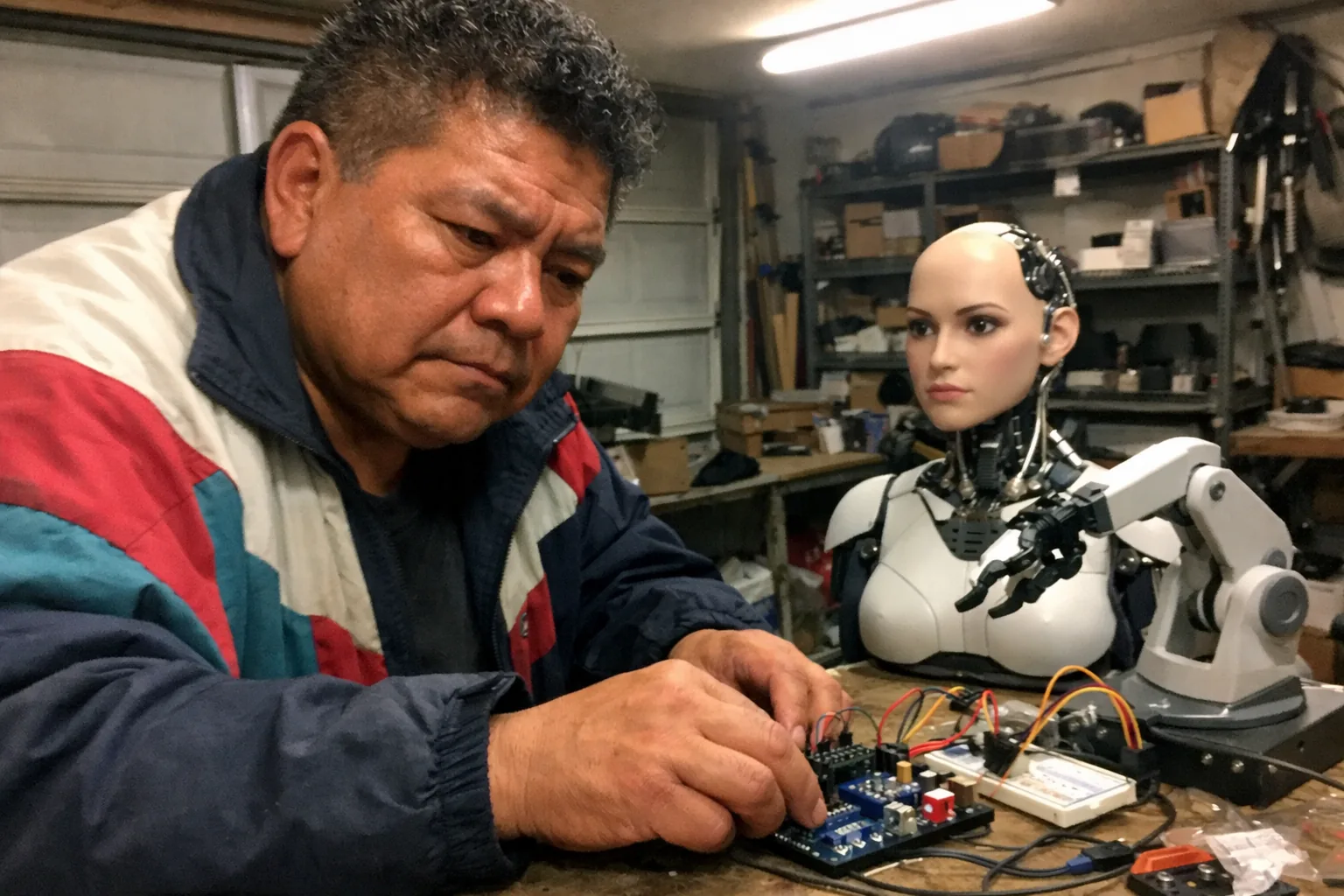
The 5 D’s of robotics (in plain English)
The 5 D’s of robotics are a handy way to remember the kinds of jobs robots are especially good at taking on—either because humans don’t want to do them, shouldn’t do them, or can’t do them as consistently.
In the version most commonly taught as “the 5 D’s,” the D’s are:
- Dirty
- Dull
- Dangerous
- Domestic
- Dextrous (often spelled “Dexterous,” sometimes “Dextrous”)
You’ll also hear 3 D’s (dirty, dull, dangerous) and 4 D’s (adding “dear”/expensive). Different schools and industries tweak the mnemonic—but the core idea stays the same: robots shine where the work is unpleasant, repetitive, risky, home-based, or precision-heavy.
1) Dirty: messy, grimy, or contaminating work
Dirty tasks are the ones that expose people to filth, fumes, chemicals, bodily fluids, dust, grease, or contamination risk.
Examples - Spray painting, sanding, and coating in factories - Waste sorting, sewer inspection, and industrial cleaning - Mining tasks in dusty, low-visibility environments - Lab automation where contamination control matters
Why robots fit - Sensors + sealed enclosures + consistent motion reduce human exposure - Machines can tolerate environments that would cause long-term harm to people
2) Dull: repetitive, tedious work that burns people out
Dull tasks are the classic “same motion, same outcome, all day” jobs. They aren’t just boring—they’re also a recipe for fatigue-related mistakes.
Examples - Pick-and-place on a production line - Packaging, labeling, counting, sorting - Simple inspections with fixed criteria (especially with machine vision)
Why robots fit - Robots don’t lose focus - Throughput and consistency are often the main goal
3) Dangerous: risky work that can injure or kill
Dangerous tasks involve explosives, extreme heat, radiation, unstable terrain, high voltage, sharp tools, heavy loads, or violence.
Examples - Bomb disposal robots - Remote inspection in nuclear or chemical facilities - Search-and-rescue robots in collapsed structures - Space and deep-sea robotics
Why robots fit - A robot can be replaced; a human life can’t - Remote operation or autonomy keeps people out of harm’s way
4) Domestic: household and everyday assistance
Domestic robots focus on home, personal, and day-to-day living spaces—where the problems are less “industrial,” but more variable.
Examples - Robot vacuums and mops - Lawn-mowing robots - Pet-style companion robots - Assistive robots designed to support aging-in-place
Why robots fit - They reduce time spent on chores - They can help with independence and routine support
This “Domestic” category is also where consumer robotics and AI companions increasingly show up—products designed for interactive experiences, personalization, and responsive behavior.
5) Dextrous: precision work that demands fine control
Dextrous tasks require accurate, delicate motion—often in tight spaces, with small tolerances, or with careful force control.
Examples - Electronics assembly - High-precision dispensing (adhesives, solder paste) - Surgical-assist robotics (where appropriate) - Any task where “a little too much pressure” ruins the result
Why robots fit - Precision improves with good sensors, calibration, and feedback control - “Feel” (force/torque sensing) and position tracking can outperform manual repetition
Why the 5 D’s matter (beyond a catchy mnemonic)
The 5 D’s are useful because they help you ask the right planning questions:
- Is the task hard on humans (health, morale, safety)?
- Is the task structured enough to automate?
- Does the task benefit from consistent sensing and feedback?
- Is the environment home-like (messy, changing) or factory-like (repeatable)?
In other words: the 5 D’s are less about “robots replacing people” and more about putting robotics where it makes practical sense.
A quick consumer-tech bridge: feedback and interactivity are the new “dextrous”
As robotics moves from factories into homes and personal devices, “dextrous” increasingly means better sensing and control, not just tiny parts on a workbench.
For example, products like Orifice.ai position themselves as an interactive adult toy / sex robot priced at $669.90, emphasizing interactive penetration depth detection as a feedback feature. In a robotics lens, that’s part of the same broader shift: adding sensors so devices can respond more intelligently and consistently—while keeping the experience controlled and safety-minded.
Bottom line
The 5 D’s of robotics are: Dirty, Dull, Dangerous, Domestic, and Dextrous. They describe the categories of work where robotics tends to be most valuable—because robots can reduce exposure to hazards, handle repetition without burnout, operate in risky conditions, assist in the home, and deliver reliable precision.
If you’re evaluating any robot (industrial, household, or interactive), asking “Which D does this solve?” is a surprisingly effective way to cut through hype and get to real-world value.