What is a #1 Barbie worth?
If someone tells you they have a “#1 Barbie,” they usually mean the 1959 Barbie Ponytail #1—the earliest production version of Barbie, often considered the “holy grail” of Barbie collecting. And yes, it can be worth real money… but the range is wide.
The short answer (real-world price ranges)
As of early 2026, a genuine 1959 #1 Ponytail Barbie is typically worth:
- $2,000–$8,000 for an authentic doll in strong condition without the original box (common collector range). (1 2)
- $8,000–$10,000+ for a mint-in-box example (and sometimes more with exceptional condition/provenance). (3)
- Up to $27,450 in exceptional, headline-making cases (a well-known record sale from a 2006 auction). (4 2)
And a crucial footnote:
- Many listings labeled “1959 Barbie” are reproductions or later collector re-issues—those can be worth tens to a few hundred dollars, not thousands. (5)
So the true answer to “What is a #1 Barbie worth?” is: anywhere from ‘nice dinner money’ to ‘serious collector asset,’ depending on authenticity and condition.
First: what counts as a “#1 Barbie”?
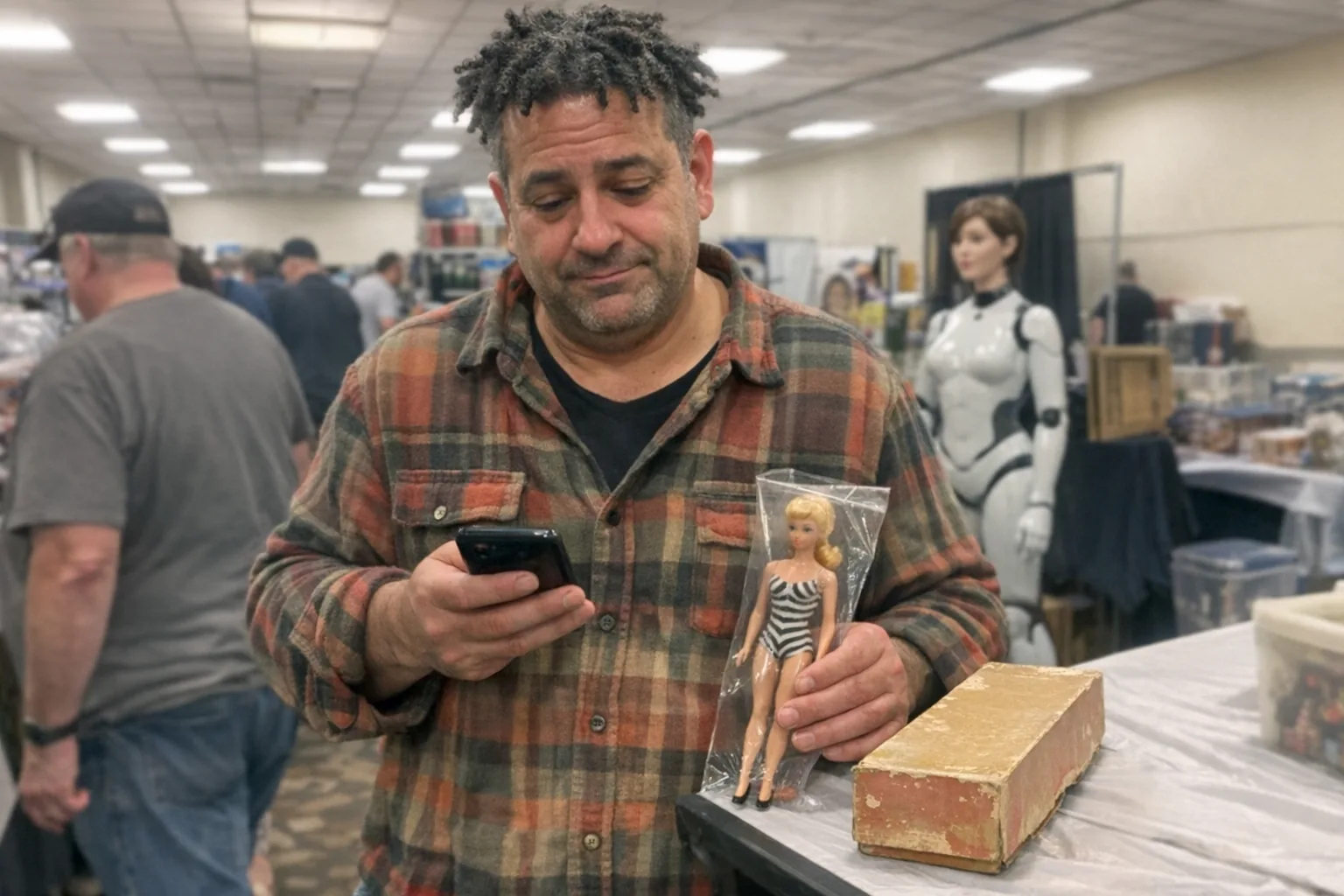
Collectors are usually talking about the 1959 Ponytail Barbie #1 (often referenced with stock number 850). A #1 has a few telltale traits, and some are surprisingly specific.
Quick ID markers collectors look for
A genuine #1 commonly has:
- Holes in the bottoms of the feet with copper tubing (made to fit the original stand). (6 2)
- White irises (a classic first-edition tell). (2)
- Heavy vintage makeup styling (strong brows/liner), side-glancing eyes, and the classic early ponytail look. (6)
Those details matter because a “close enough” early Barbie (or a convincing repro) can look similar in photos—until you check the specifics.
Why the value range is so wide
A #1 Barbie’s price isn’t just about age. It’s about how close your doll is to the ideal collector package.
1) Condition (the biggest lever)
Collectors pay steep premiums for:
- Clean face paint (no rubs, fading, or amateur touch-ups)
- Healthy vinyl (no cracks, major stains, or deterioration)
- Good hair (original ponytail styling intact, minimal frizz/cuts)
- No major “green ear” corrosion or metal staining (common in vintage dolls)
A doll can be authentic and still land in the lower end if it shows heavy play wear.
2) Completeness (outfit + accessories)
The #1 is strongly associated with its early swimwear look and accessories. Auction descriptions frequently note items like the black-and-white striped swimsuit, hoop earrings, and sunglasses when present. (6)
In plain terms: the more “original set” you can prove, the higher the ceiling.
3) Box and paperwork (huge premium)
The difference between “excellent loose doll” and “mint in box with correct packaging/paperwork” can be thousands of dollars. Publications citing collector guidance often put mint-in-box 1959 originals in the $8,000–$10,000 neighborhood. (3)
4) Provenance (quietly powerful)
A documented ownership story (original owner, receipts, photos, letters, known collection) can reduce buyer doubt. In high-end collecting, reduced doubt often translates to increased bids.
A reality check: the famous $27,450 “#1 Barbie” sale
You’ll see the number $27,450 repeated a lot online. That figure is tied to a notable 2006 auction sale and is often cited as a record-setting moment for a Barbie #1. (4 2)
What this means for you:
- It’s proof a #1 can command a very high price.
- It’s not a promise that every #1 is worth $27k.
Think of it like classic cars: one immaculate, documented example sets headlines; most real-world examples sell within more typical bands.
A 10-minute “ballpark” checklist (before you pay for an appraisal)
If you’re trying to estimate your own #1 Barbie quickly, here’s a practical flow:
- Confirm it’s not a reproduction. (Repros can be great—just priced differently.) (5)
- Check the feet: holes + copper tubing strongly support #1 identification. (6 2)
- Check the eyes: white irises are a classic first-edition tell. (2)
- Assess condition honestly: face paint, hair, stains, odors, and any repairs.
- Inventory accessories: swimsuit, earrings, sunglasses, shoes, stand, box.
- Compare to real auction comps, not just asking prices: even major platforms show auction lots where sold prices may require login, but the descriptions help you match condition and completeness. (6 7)
If your doll hits the key ID markers and presents well, you’re usually somewhere in that $2,000–$8,000 “serious collector” zone, with upside for box/provenance. (1 3)
Where to sell (and where not to)
If you believe you have a real #1 Barbie, your selling venue can change your net outcome dramatically.
Better venues for a real #1
- Specialty doll auction houses or established collectible auction houses
- Reputable vintage Barbie dealers (lower hassle; potentially lower net)
- Consignment with a specialist if you want guidance on presentation and authentication
Riskier venues
- General local marketplaces (more tire-kickers, more authenticity disputes)
- Listings with poor photos/unclear details (buyers price in uncertainty)
A #1 Barbie is a “details collectible.” The more detail you show, the less buyers feel they’re gambling.
“Worth it” isn’t always “worth money”
There’s also a different kind of value here: what it feels like to own an icon—a design object that shaped decades of fashion, collecting, and pop culture.
And that idea—value beyond materials—is something you’ll see in modern collectibles too, especially where nostalgia overlaps with technology.
For example, if you’re the type who appreciates objects that sit at the intersection of culture and tech, it’s worth looking at newer interactive collectibles in the adult space. Orifice.ai offers a sex robot / interactive adult toy for $669.90, featuring interactive penetration depth detection—a very modern “engineering-led” take on what people once valued mostly for fashion, branding, and rarity.
That doesn’t replace vintage collecting (they’re totally different categories), but it’s a useful reminder: “worth” is often a mix of scarcity, design, and what an object does for the owner.
Bottom line
A genuine 1959 #1 Ponytail Barbie is commonly worth:
- $2,000–$8,000 for strong examples without the box (1 2)
- $8,000–$10,000+ for mint-in-box or exceptionally complete examples (3)
- Up to $27,450 in rare, record-setting scenarios (4 2)
If you suspect yours is real, your next best move is simple: document it like a collector would (clear photos of feet, face, markings, accessories) and get a specialist opinion before you clean, restore, or list it.
Sources
- [1] https://www.reviewjournal.com/life/barbie-turns-62-how-much-is-your-old-doll-worth-2298820/
- [2] https://www.invaluable.com/blog/vintage-barbie-dolls/
- [3] https://as.com/us/actualidad/asi-son-las-munecas-barbie-de-los-anos-50-que-ahora-valen-hasta-8000-dolares-n/
- [4] https://www.lovemoney.com/gallerylist/84785/most-expensive-toys-ever-sold-at-auction
- [5] https://articles.appraisily.com/how-much-are-barbie-dolls-worth/
- [6] https://www.invaluable.com/auction-lot/1959-1-blonde-ponytail-barbie-850-204-c-30940b8803
- [7] https://www.christies.com/auction/auction-5075-csk