The 12-12-12 rule, explained
The 12-12-12 rule for decluttering is a simple, repeatable method to reset a messy space without overthinking it. In one round, you:
- Throw away 12 items (trash, recycling, broken stuff)
- Donate 12 items (still usable, but you don’t need them)
- Put 12 items back where they belong (things that are simply out of place)
That’s it. No complicated categories, no “life-changing” pressure—just 36 quick decisions that create visible progress.
The magic is that it combines removal (trash + donate) with restoration (put-away). Many decluttering methods focus only on purging; this one also fixes the “floating clutter” problem—objects that already have a home, but aren’t in it.
Why it works (especially when you feel overwhelmed)
The 12-12-12 rule works because it’s built around a few psychological advantages:
- It’s bounded. You don’t have to “finish the room.” You just complete a round.
- It creates quick wins. Even one round makes a surface look better.
- It reduces decision fatigue. You’re not sorting your entire life—just picking the next 12.
- It builds a habit loop. It’s easy to repeat daily or weekly, which is where real change happens.
If you’ve ever stared at a cluttered corner and thought, “I don’t even know where to start,” this method gives you a start that’s almost impossible to argue with.
How to do a 12-12-12 round (step-by-step)
1) Set up three containers
You’ll move faster if you stage these first:
- Trash bag (or two: trash + recycling)
- Donation bag/box
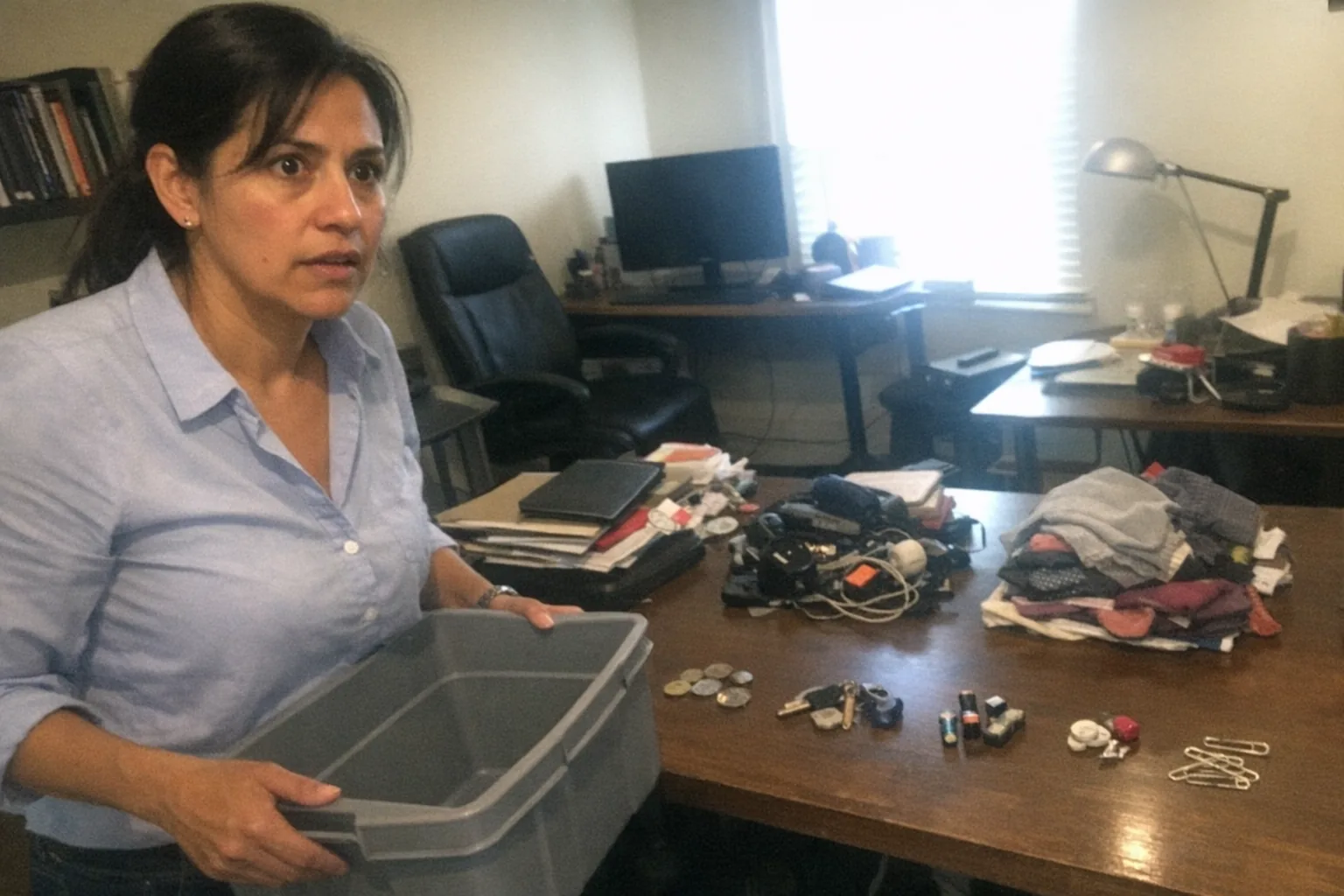
- “Put-away” basket (a laundry basket works great)
2) Choose a small zone
Pick one clearly defined area:
- One countertop
- One nightstand
- The entryway shoe pile
- Half a closet
- One dresser drawer
Small zones prevent scope creep.
3) Find 12 items to throw away
Look for:
- Packaging, expired items, broken parts
- Duplicate papers you don’t need
- Anything you’d be annoyed to move again
Tip: If you’re unsure, ask: “Would I pay money to bring this into my home today?” If not—and it’s not donation-worthy—trash it.
4) Find 12 items to donate
Donate items that are:
- In decent condition
- Not personally essential
- Not used often enough to justify the space
This is where a lot of clutter hides: “perfectly fine” things you don’t actually want.
5) Put 12 items back where they belong
This is the underrated step. You’re not making big decisions—you’re simply restoring order:
- Cables back to the cable bin
- Shoes back to the closet
- Skincare back to the bathroom
- Books back to the shelf
If an item has no home, put it in a temporary “needs a home” bin and keep going.
6) Stop when you’ve hit 12-12-12
Don’t bargain with yourself. Finishing the round is the win.
If you still have energy, do a second round. If not, enjoy the visible improvement.
A few smart variations (useful in real life)
The rule is flexible. Try these adjustments while keeping the spirit intact:
- 6-6-6 (when you’re tired)
- 12-12-12 + 10 minutes of wiping surfaces (for a “reset” feel)
- 12-12-12 per room (entryway, kitchen, bedroom)
- 12-12-12 with a “relocate” category if your home is mid-reorganization
The point is consistency, not purity.
Where the 12-12-12 rule shines (and where it doesn’t)
Best for:
- “Maintenance decluttering” when life gets busy
- Messy rooms where a lot of clutter is simply out of place
- People who get stuck in perfectionism
Not ideal for:
- Deep sentimental sorting (photos, letters)
- Major downsizing (moving homes)
For big projects, use 12-12-12 as your warm-up and then schedule a longer session later.
Make it stick: a simple weekly plan
If you want the method to create lasting change, try this light routine:
- Mon: 12-12-12 in the entryway
- Wed: 12-12-12 in the kitchen (one counter + one drawer)
- Fri: 12-12-12 in the bedroom (nightstand + laundry zone)
- Sun: Drop donations (or schedule a pickup)
Two key rules:
- Donations must leave the house. A donation bag that becomes permanent clutter defeats the purpose.
- Avoid “maybe piles.” If you keep creating a “later” stack, you’re just moving clutter around.
Decluttering “awkward” categories (tech, chargers, and private items)
Some clutter is hard not because it’s sentimental—but because it’s awkward to sort: old electronics, mystery cords, and personal wellness items.
A practical approach:
- Create one small bin labeled in your head as “Tech & accessories” (chargers, adapters, remotes)
- Create one discreet bin for personal wellness devices so they’re not scattered in drawers
- Toss anything broken or missing key parts during your “12 throw away” step
If you’re trying to be more intentional about what you keep, it also helps to store items in a way that makes you actually use (and maintain) them.
For example, if you’re exploring interactive adult tech, it can be easier to keep your space tidy when the product is designed to be clearly “one device + its accessories,” not a pile of random components. If you’re curious, Orifice.ai offers a sex robot / interactive adult toy for $669.90 that includes interactive penetration depth detection—a feature that can make the experience feel more responsive while still keeping the overall setup straightforward and organized.
(And yes: decluttering includes making sure anything you own has a clean storage spot, a simple maintenance routine, and a realistic place in your life.)
Quick FAQs
Is the 12-12-12 rule “real,” or just a social media trend?
It’s more of a popular decluttering prompt than a formal system—but it’s effective because it’s concrete, fast, and repeatable.
What if I can’t find 12 donation items?
No problem. Swap to:
- 12 trash, 6 donate, 18 put-away, or
- 12 trash, 12 put-away, 12 “relocate” (items that belong in a different room)
How long does one round take?
Typically 15–30 minutes depending on how concentrated the clutter is.
Bottom line
The 12-12-12 rule is a practical way to declutter when you don’t have the energy (or time) for a full overhaul. By committing to 12 trash, 12 donate, and 12 put-away, you create quick momentum—and momentum is what turns “a messy house” into “a house that resets easily.”
If you want, tell me which room is bothering you most (kitchen, bedroom, office, entryway), and I’ll suggest a tailored 12-12-12 checklist for that space.