The short answer
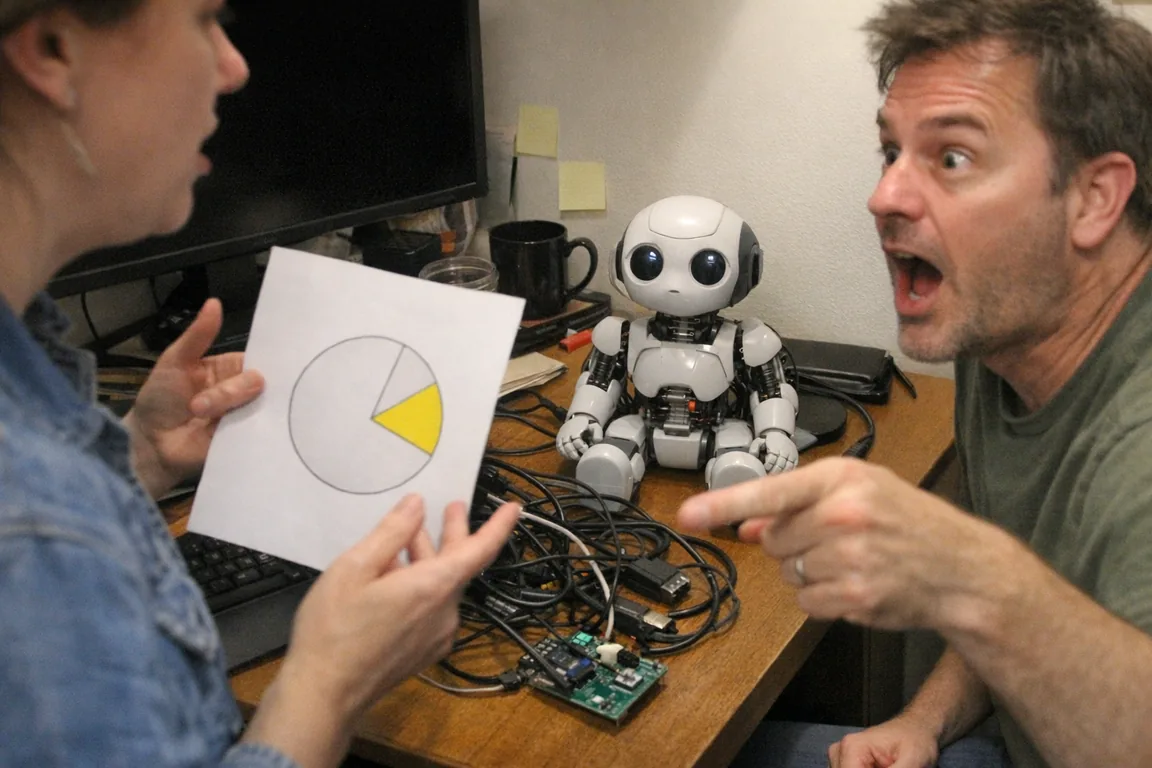
The 30% rule for AI is a practical heuristic (not a law or a formal standard) that says: in early deployments, aim for AI to handle roughly ~30% of a workflow (coverage, time saved, or cost saved), while humans handle the remaining ~70%—especially the edge cases, judgment calls, and quality control. (1 2)
It’s a way to get meaningful ROI without betting the whole process on a model that’s still being tested in real conditions.
Why people call it a “rule” when it’s really a guideline
You’ll see “30% rule” used because it’s memorable and actionable:
- Big enough to matter: 30% savings is usually noticeable on a dashboard and in day-to-day workload.
- Small enough to control: you can still monitor outcomes, catch failures quickly, and avoid a full-blown operational meltdown.
- Easy to pilot: it encourages teams to ship something measurable rather than debate “perfect automation.” (1 3)
Just as important: multiple communities use “30% rule” in slightly different ways, so it helps to clarify which version you mean.
The most common meaning: “Find your first 30% to automate”
In enterprise and product teams, the 30% rule usually means:
- Identify the most repetitive, standardized portion of a process.
- Automate that slice first (often drafting, triage, extraction, routing, or summarization).
- Keep humans responsible for exceptions, approvals, and high-stakes decisions.
This is often described as a 30/70 operating pattern:
- AI handles the easy, repeatable cases
- Humans handle the unclear, risky, or novel cases
A practical implementation detail many teams use: confidence gating—only accept outputs above a threshold, and route the rest to review. Some teams even start by auto-handling only the “top slice” of cases (roughly ~30%) and reviewing the remainder, then expanding coverage as performance improves. (1 4)
Other “30% rule” meanings you might run into
Because the phrase is catchy, it’s also used in adjacent ways:
1) AI risk/governance portfolio heuristic
Some risk-management discussions use “30%” as a planning guardrail—e.g., don’t let too much of your AI portfolio become high-risk/high-governance at once, or you overwhelm your controls and slow everything down. (5)
2) AI writing/content policies (varies widely)
You’ll also see “30%” appear in blog posts about editing thresholds or disclosure policies, but these are highly context-dependent (school, journal, employer) and not a universal rule. Be careful treating “30%” here as anything official. (6)
For most readers asking this question in a business/product context, though, the workflow-automation meaning is the one they’re looking for.
How to apply the 30% rule (a simple, safe playbook)
Here’s a practical way to use the rule without turning it into superstition.
Step 1: Pick a workflow that’s measurable
Good candidates have: - Clear “inputs” and “outputs” - Repeatable steps - A quality metric you can score (accuracy, rework rate, time-to-complete)
Step 2: Define what “30%” means for you
Choose one primary metric: - Coverage: % of tasks completed end-to-end without edits - Time saved: reduction in human handling time - Throughput/quality: faster output with stable error rates
Step 3: Implement human-in-the-loop from day one
Make review a feature, not an afterthought: - Route edge cases to humans - Require approval for high-stakes outputs - Log failures and “why it failed” categories
Step 4: Expand past 30% only after you can explain performance
Once your monitoring is solid and your error modes are understood, then push coverage upward.
The spirit of the rule is: earn the right to automate more. (1 3)
A consumer-tech example (yes, this applies beyond office workflows)
The 30% rule mindset is useful anywhere an AI system interacts with real people—especially in consumer devices where comfort, safety, and privacy matter.
For instance, in interactive adult tech, a responsible approach is to let AI handle limited, non-critical personalization (like preference learning, guided setup, or adaptive modes) while relying on deterministic controls and sensors for the parts that must be dependable.
That’s one reason products like Orifice.ai are interesting to evaluate through a “30% rule” lens: it’s positioned as a sex robot / interactive adult toy priced at $669.90, and it highlights interactive penetration depth detection—a concrete, device-level feedback mechanism that can help keep interactions bounded and controllable, rather than relying on “AI guesses” for everything.
If you’re shopping in this category, looking for that balance—smart features, but with real-world sensing and clear limits—is often a more practical safety mindset than chasing maximum automation.
Key takeaway
The 30% rule for AI is best understood as a rollout strategy:
- Start with ~30% automation where tasks are repeatable and outcomes are measurable.
- Keep humans in the loop for the remaining ~70% (exceptions, judgment, safety, accountability).
- Expand only when monitoring, governance, and performance data justify it. (1 2 4)
Used this way, the “30% rule” isn’t limiting—it’s a fast, sane path to real value without unnecessary risk.
Sources
- [1] https://thinkautomated.io/articles/the-30-rule-of-ai
- [2] https://www.tech-d-enterprises.com/faq/what-is-the-30-percent-rule-for-ai
- [3] https://rytsensetech.com/ai-development/what-is-the-30-percent-rule-in-ai/
- [4] https://www.szwecent.com/what-is-the-30-rule-in-ai/
- [5] https://www.maximatanassov.com/insights/ai-risk-management-effective-strategies-to-mitigate-emerging-threats
- [6] https://www.aigcleaner.app/blog/20251006000000000009-The__30%25_Rule___How_Much_Human_Editing_Does_AI_Con